
A 1.35 litre system works by combining a controlled micro water rinse with a high velocity air flush inside a sealed environment. Instead of relying on gravity and large volumes of water, it uses intelligent electronics, an air pump, and a closed lid system to remove waste efficiently while dramatically reducing commercial toilet water savings.
For facilities teams searching for water saving toilets, low flush toilets, and high efficiency toilets for commercial washrooms, understanding the engineering behind the technology matters.
This article explains how the Propelair OneThreeFive toilet works, how it compares to conventional systems, and separates myth from fact using real-world data.
How Does a 1.35 Litre Propelair System Actually Work?
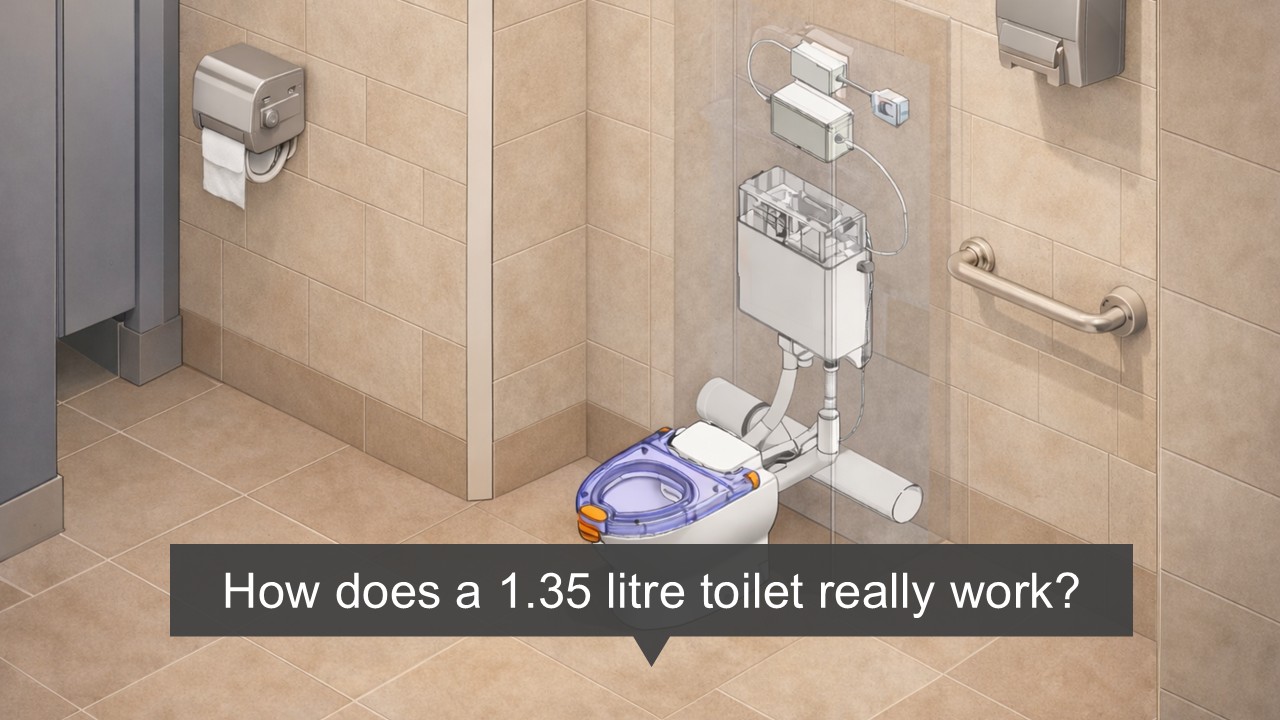
At its core, the Propelair 135 is a controlled air-assisted flush system designed for commercial environments.
The cistern contains:
- An Actuated Gate Valve (AGV)
- An isolated water reservoir
- An integrated air pump
- An electronic PCB control unit
- Water and air delivery systems
Performance Data
- Flush noise: 79 dB
- Water flush: 1.35 litres
- Air flush volume: 70 litres
- Refill time: 13 seconds
- Flush duration: 26 seconds
- Energy usage: 0.33 Wh per flush
This combination of low water use toilet technology and air displacement is what makes it one of the best water saving toilets for businesses operating at scale.

The Flush Sequence Explained
When the user closes the lid:
- The system resets and is ready again in 13 seconds.
- The system confirms lid closure via sensor control.
- Water level is verified inside the cistern.
- A small pre-rinse (approximately 0.35 litres) takes place.
- The air pump delivers 70 litres of air in approximately one second.
- Waste is displaced through the outlet using air pressure rather than gravity alone.
- The trap is refilled.
- The system resets and is ready again in 13 seconds.
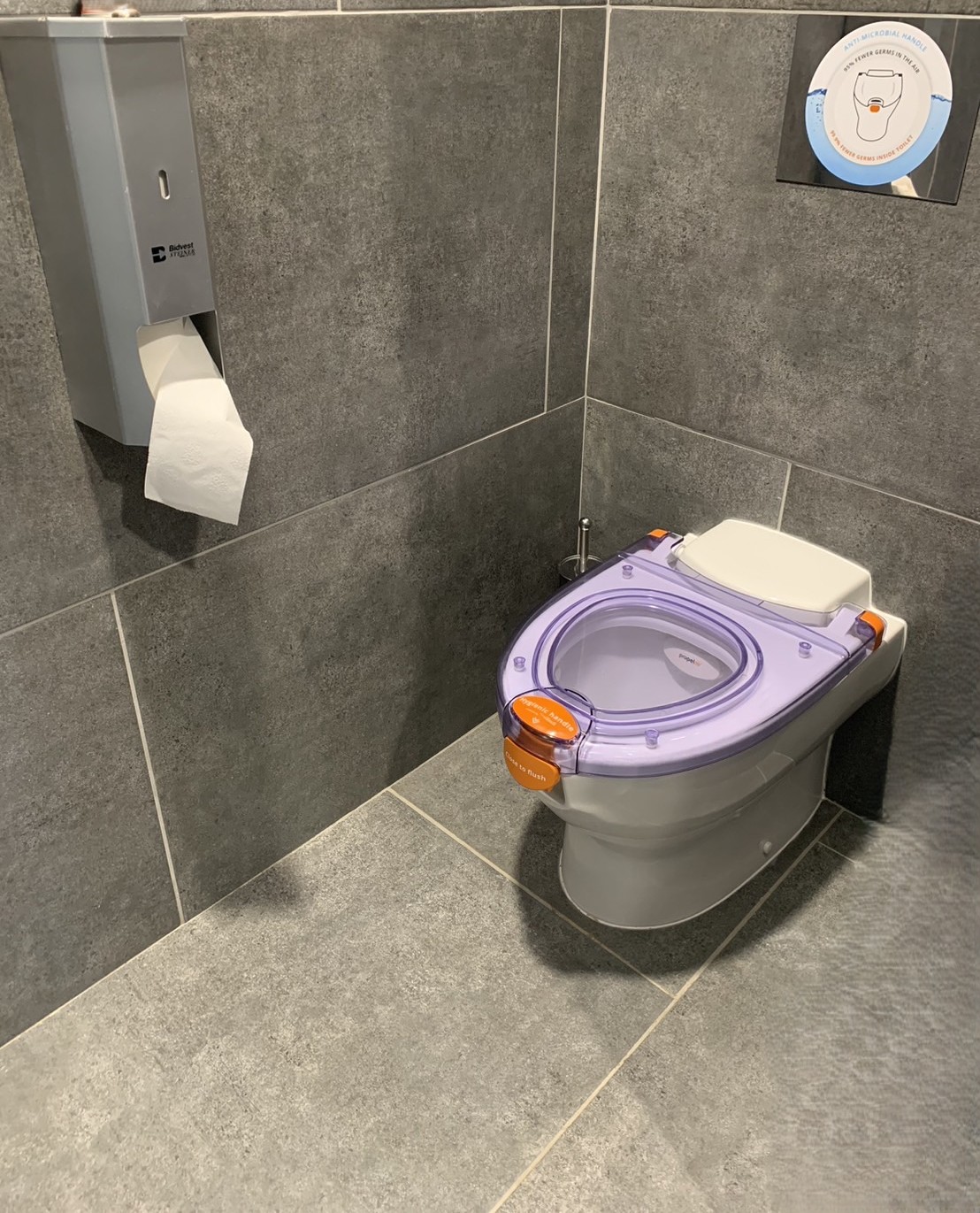
Because the lid forms a seal:
- Odours cannot escape
- Germs are contained
- Splashback, or the sneeze effect, is eliminated
- Hygiene performance improves
This is why Propelair systems are often described as toilets with hygiene technology.
How Does Propelair Compare to Other Toilet Technologies?
Unlike many alternatives, Propelair is a tech enabled low flush toilet designed specifically for commercial scale usage.
| System Type | How It Works | Limitations | Water & Performance Reality |
| Standard WC (6L gravity) | Water drops by gravity into pan | Reduced performance at low volume, frequent double flush | Often exceeds designed water volume in real use |
| Dual Flush | Reduced flush for liquids | Full flush still required for solids, often double flushed | Water saving depends on user behaviour |
| Pressure Assisted | Compressed refill water boosts next flush | Still gravity dependent, mechanical complexity | Moderate improvement |
| Vacuum Systems | Central vacuum extracts waste | Energy intensive, requires dedicated infrastructure | Not compatible with standard drains |
| Macerating | Waste shredded and pumped | Noisy, risk of mechanical blockages | Complex maintenance |
| Compressed Air (drop chamber) | Trap door drops waste into chamber | Additional compartment and mechanism | More moving parts |
| Propelair OneThreeFive toilet | 1.35L pan rinse + high velocity air flush in sealed lid | Requires power and trained installation | 1.35L controlled flush, zero double flush, reduced sewage & carbon |
What Makes It Different from Standard Gravity Toilets?
Traditional WCs depend entirely on water volume. Building regulations cap new toilets at 6 litres full flush. But as water volume reduces, performance typically declines, resulting in:
- Double flushing
- Higher actual water consumption
- Increased sewer loads
Propelair changes the physics of flushing. Instead of gravity alone, it uses displaced air pressure inside a sealed environment. It can connect to existing 100mm drainage and even push waste through a 2” / 50mm flexible waste pipe without relying purely on gradient.
This makes it ideal for:
- Refit projects
- Commercial bathroom water conservation upgrades
- Water-stressed regions
- Sustainable washroom solutions
- Off-grid sites
Water Saving Toilets: Myth vs Fact
A Real Example – Thames Water: Thames Water is the UK’s largest water and wastewater services company. They trialled Propelair systems within their own facilities to validate performance and sustainability outcomes. You can explore the full case study via Propelair’s website, here.
Myth 1: “Low flush toilets don’t clear properly.”
Fact: Many gravity-based low flush toilets struggle at reduced volumes. The Propelair OneThreeFive toilet uses 70 litres of air displacement per flush, enabling waste removal without relying on large water volumes. Thames Water validated operational performance in a high usage environment.
Myth 2: “They need double flushing.”
Fact: Double flushing increases water usage beyond design capacity in conventional systems. Propelair’s controlled sequence, air displacement and sealed environment reduces repeat flushing, improving commercial toilet water savings.
Myth 3: “They only save water, not money.”
Fact: For facilities searching for ways to reduce water bills and improve commercial washroom cost savings, water reduction directly reduces:
- Utility/water costs
- Sewer discharge fees
- Carbon footprint
- ESG reporting pressure
You can see the real data here.

Why Are Smart Water Saving Toilets Becoming Essential?
Facilities managers today face rising utility costs, sustainability reporting obligations, water scarcity pressure and ageing plumbing infrastructure. Propelair systems that are IoT connected is a smart water savings toilet that is designed for sustainability and hygiene, in commercial spaces. When data is available via IoT or asset tracking QR codes, it supports digital FM transformation, and when evaluating water efficient sanitation solutions, the conversation should be a data one, not just a plumbing one!
Frequently Asked Questions – Propelair OneThreeFive
Is it energy intensive? Energy consumption is approximately 0.33 Wh per flush, extremely low compared to building-wide energy loads.
Does it connect to standard drainage? Yes. It connects to standard 100mm drainage in accordance with Building Regulation H1.
What happens if the lid opens mid-flush? The system stops and resets. It will not flush unless the lid is sealed.
How fast can it be used again? Refill time is 13 seconds, making it suitable for high traffic commercial washrooms.
Is it noisy? Flush noise is rated at approximately 79 dB, comparable to commercial flush systems.
Final thoughts: Is 1.35 Litres Enough?
In gravity systems, 1.35 litres would not be enough. In a sealed, air-assisted, electronically controlled system designed specifically for high efficiency toilets for commercial washrooms, it absolutely is.
For organisations seeking water efficient toilets and sustainable washroom solutions for cost of water-stress purposes, Propelair doesn’t presents a marginal improvement but a fundamental shift in how commercial sanitation performance is engineered and measured.
If you would like to explore the full breakdown of products, visit our website.
By: Zea Gove, Global Brand Strategist and Marketing Manager, Propelair