
Water is fast becoming one of the most critical operational risks for commercial buildings. Rising utility costs, infrastructure pressure, and increasing ESG reporting requirements are forcing organisations to rethink how water is managed across their estates. Yet, one of the biggest opportunities for commercial bathroom water conservation is often overlooked, the washroom itself.
From water saving toilets to smart monitoring systems, the shift toward sustainable washroom solutions is no longer optional. It is measurable, trackable, and commercially beneficial. In this guide, we explore the most effective strategies, answer the most common questions around low flush toilets, and demonstrate real-world impact through case studies.
What Are the Top Water Conservation Strategies in Commercial Buildings?
Short answer: The most effective strategies focus on high-consumption areas first, with toilets being the single biggest opportunity for commercial toilet water savings, followed by smart monitoring and behavioural optimisation.
| Strategy | Strategy 1: Toilets, the Number One Water Saving Opportunity | Strategy 2: Smart Monitoring and IoT Integration | Strategy 3: Behavioural and System Optimisation |
|
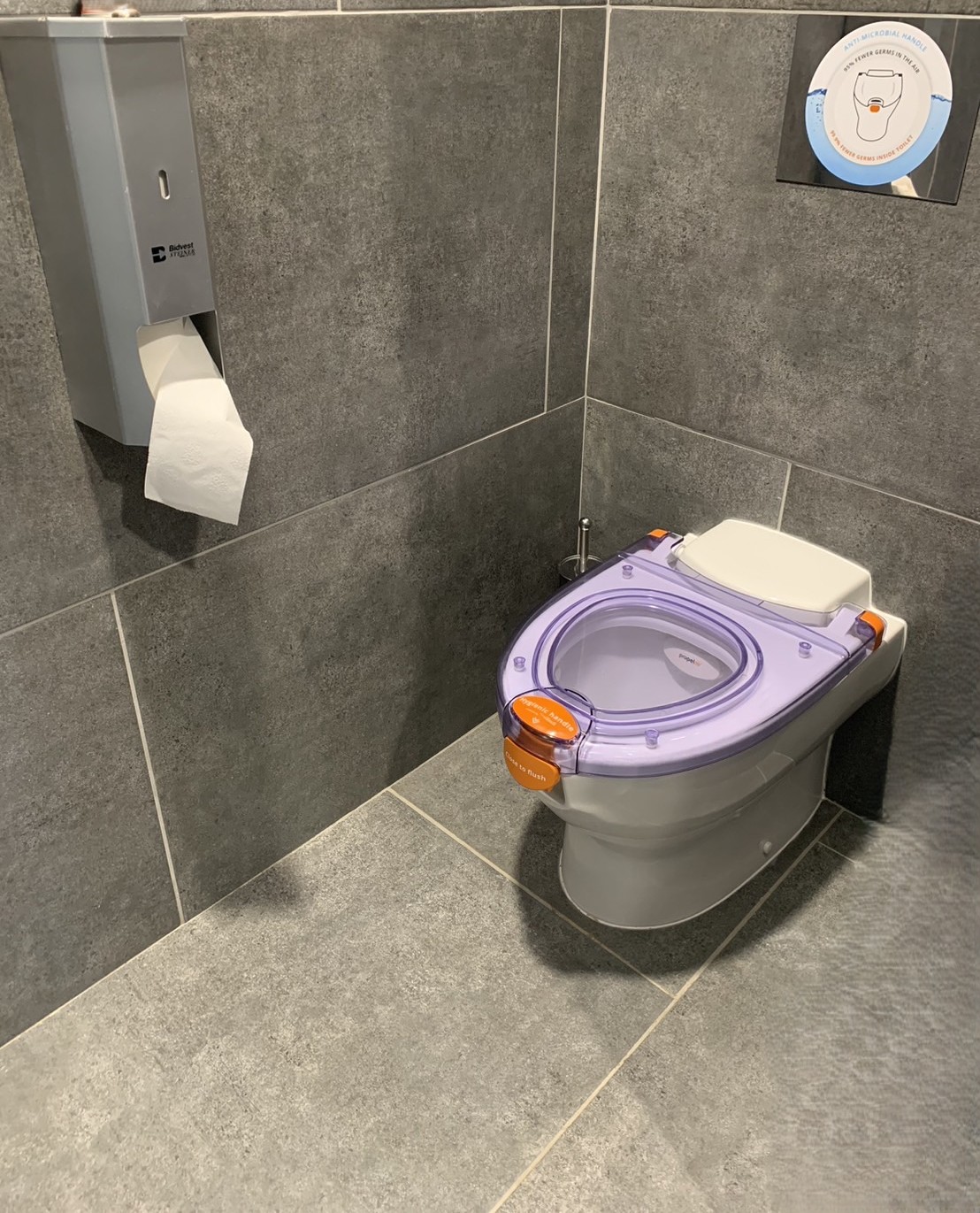
Toilets account for up to 60% of water consumption in commercial buildings, particularly in high foot-traffic environments such as shopping centres, airports, hospitals, and office blocks. This makes them the most impactful place to implement high efficiency toilets for commercial washrooms. Traditional systems typically use 6–9 litres per flush. In contrast, modern low water use toilet technology, such as the Propelair OneThreeFive toilet, uses just 1.35 litres per flush. |
The second most effective strategy is visibility. Without accurate data, water usage is estimated rather than measured. This is where IoT connected toilets and smart water saving toilets transform operations. With systems like Propelair Connect:
|
While technology drives the biggest gains, user behaviour still plays a role. However, relying solely on behaviour is unreliable. For example:
| |
| Why this matters |
|
|
|
| Environmental impact in high-traffic venues: |
|
|
|
| Top tip for facility managers | Start with your highest traffic washrooms first. A small number of high-use toilets will deliver the fastest ROI and the biggest water savings. | If you cannot measure it, you cannot manage it. Prioritise technologies that provide real-time usage and performance data. | Choose systems that remove user dependency. Design-led solutions outperform behaviour-led savings every time. |
How Do Water Saving Toilets Perform in Real Commercial Environments?
Short answer: Real-world installations consistently show significant reductions in water use, cost, and carbon emissions.
A strong example is Siemens, a global engineering leader known for innovation and sustainability. At their South African campus, Siemens partnered with Propelair to improve water efficiency across multiple buildings.
Results achieved:
- 112 toilets installed
- 85% reduction in water usage
- 5.46 million litres saved annually
- Significant carbon reduction
- Improved operational reliability
This demonstrates how commercial washroom cost savings and sustainability can be achieved simultaneously.
See how this works in practice: https://propelair.com/case-study/siemens/

What Are the Most Frequently Asked Questions About Low Flush Toilets?
Modern low flush toilets are highly engineered systems designed to deliver performance, hygiene, and reliability, even in high-traffic commercial environments.
Yes. Extensive independent testing confirms that 1.35 litres is sufficient for an effective flush. Modern tech enabled low flush toilets use air-assisted technology to enhance performance, ensuring waste removal without increasing blockage risk.
No. For optimal performance, the lid must seal quickly. This “close-to-flush” approach:
- Improves flushing efficiency
- Reduces queue times
- Minimises airborne contamination (sneeze effect)
Blockages can be cleared using standard tools. However, the Propelair OneThreeFive toilet offers a unique dry flush function:
- Activated via latch movement
- Uses pressurised air to clear blockages
- Minimises downtime in commercial washrooms
Yes. Modern systems are fully certified and extremely efficient.
Energy consumption is minimal:
- Approximately 0.33Wh per flush
- Offset significantly by water and cost savings
Flexible power options include:
- Direct mains connection
- Backup battery systems
No. Installation starts with a site assessment.
This ensures:
- Compatibility with existing infrastructure
- Accurate savings projections
- Compliance with warranty conditions
Only trained installers should complete installation.
Yes. During pre-installation assessment:
- Drain compatibility is verified
- Retrofit feasibility is confirmed
IoT-enabled systems:
- Transmit real-time performance data
- Alert maintenance teams instantly
- Reduce downtime and service costs
Yes, IoT can be retrofitted to existing Propelair installations.
QR-based systems:
- Enable real-time asset visibility
- Track maintenance history
- Provide performance analytics
- Eliminates manual tracking and improves operational efficiency.
The Propelair OneThreeFive toilet offers triple hygiene protection:
- Antimicrobial materials in high-touch areas
- Sealed lid reduces airborne germs
- High-powered flush removes 99.9% of contaminants
No. Despite advanced technology:
- Cleaning remains simple
- Standard soap and water is sufficient
- Rimless design improves accessibility
How Does Propelair Compare to Other Toilet Technologies?
Not all toilet systems deliver the same level of efficiency. Air-assisted systems provide the most consistent performance with the lowest water use. Unlike many alternatives, Propelair is a tech enabled low flush toilet designed specifically for commercial scale usage.
| System Type | How It Works | |
| Standard WC (6L gravity) | Water drops by gravity into pan |
Simple design High water consumption Often require double flushing |
| Dual Flush | Reduced flush for liquids |
|
| Pressure Assisted | Compressed refill water boosts next flush |
Improved flush strength Still water-dependent Mechanically complex |
| Vacuum Systems | Central vacuum extracts waste | If you cannot measure it, you cannot manage it. Prioritise technologies that provide real-time usage and performance data. |
| Macerating | Waste shredded and pumped |
Break down waste mechanically Higher maintenance requirements |
| Compressed Air (drop chamber) | Trap door drops waste into chamber |
Multiple moving parts Increased complexity |
| Propelair OneThreeFive toilet | 1.35L pan rinse + high velocity air flush in sealed lid |
Uses 1.35L water + high-velocity air Sealed lid ensures controlled flush No double flushing required Reduces water, sewage, and carbon |
Why this matters:
For organisations seeking sustainable toilets for facilities, the key differentiators are consistency of performance, Independence from user behaviour and measurable outcomes. Avoid solutions that rely on user behaviour. Consistent, controlled systems deliver predictable savings.
Final thoughts:
Water efficiency in commercial buildings is no longer a “nice to have”, it is a measurable business strategy. The shift toward smart water saving toilets, IoT connected toilets, and sustainable washroom solutions is redefining how facilities operate. The question is no longer whether to act, but how quickly you can implement solutions that deliver real impact.
By: Zea Gove, Global Brand Strategist and Marketing Manager, Propelair